
01.05.2025
31.10.2026

CONTENTS
1. ABOUT THE REPORT
2. FACILITY INTRODUCTION AND FEATURES
3. SUSTAINABILITY TEAM
4. REDUCING ENVIRONMENTAL IMPACTS
5. STAFF AND WORK LIFE
6. SOCIAL ACTIVITIES CONDUCTED
7. CULTURAL ACTIVITIES
As of 2025, we have started our sustainability efforts. In this context, we aim to share the progress we have made with our management, employees, guests, suppliers, and all other partners, thereby increasing awareness at this point and transforming it into common goals and achievements. This prepared sustainability report includes data from 01.05.2025 to 31.10.2026.
As Diana Residence Hotel Fethiye/Muğla, our sustainability efforts have been ongoing since our establishment. In this context, we aim to share the progress we have made with our management, employees, guests, suppliers, and all other partners, thereby increasing awareness and turning it into common goals and achievements. Within this scope, we implement and monitor our sustainability objectives and responsibilities via the Diana Residence Hotel “Quality Desk” tracking screens. This prepared sustainability report contains data from 01.05.2025 to 31.10.2026.
Our Vision & Mission and Goals: As a hotel acting with a sustainable tourism understanding, we aim to leave a good legacy for the future. Sustainability is the cornerstone of our business activities, combined with sensitivity to the environment, cultural heritage, and social needs of society.
1.1 Our Vision: Our vision is to lead the tourism sector, pioneering in preserving natural resources, minimizing environmental impacts, and supporting local cultural values. To achieve this vision, we adopt the following principles.
1.1.2 Excellence and Innovation: In line with Sustainable Tourism principles, the hotel demonstrates excellence and innovation. It aims to lead in environmental, economic, and social sustainability, adopt best practices, and continuously develop new solutions.
Guest Satisfaction: Alongside sustainability, we aim to maintain the highest level of guest satisfaction, provide quality service, meet guest expectations, and simultaneously consider environmental, economic, and social responsibilities.
1.1.3 Stakeholder Collaboration: Our hotel’s vision is to take a leadership role in sustainable tourism by establishing effective cooperation and communication among stakeholders. In line with this vision, as a sustainable tourism hotel, we work to fulfill our responsibility in the tourism sector and leave a livable world for future generations. We invite our guests to protect our natural beauties and cultural heritage.
1.1.2 Mission: Our mission is to be a tourism hotel that respects the environment, contributes to society, and preserves local cultural heritage, based on sustainable tourism principles. Our aim is to create positive impacts on the environment and society while providing our guests with an unforgettable stay experience.
1.2.3 Reducing Environmental Impacts: Minimizing environmental impacts and using natural resources sustainably. This includes increasing energy and water efficiency, improving waste management, using renewable energy sources, and reducing the carbon footprint.
Contributing to the Local Economy: The hotel supports sustainable tourism by contributing to the local economy. Sourcing materials and products from local producers, promoting local employment, supporting local cultural activities, and collaborating with local communities are part of the hotel’s mission.
Social Responsibility: Interacting with local communities, supporting social responsibility projects, and preserving local cultural values provide social benefits. The hotel aims to contribute to the well-being of the local population. Acting with this mission, as a sustainable tourism hotel, we aim to set an example in the tourism sector. While providing quality service to our guests, we respect the environment, contribute to society, and raise awareness about preserving local cultural heritage. Thus, we aim to create a sustainable tourism model for future generations and ensure tourism has positive impacts on the local economy, environment, and cultural heritage. All of this is shared with our staff and guests as our “Sustainable Quality Policy.”
3. Sustainability Team; Hotel Sustainability Team Organization Chart
3.1 Sustainability Team; consists of personnel with knowledge and experience in environmental, social, and economic sustainability. When forming the team, the following points were considered:
3.1.1 Team members must be sensitive to environmental issues and understand sustainability principles. This includes conservation of natural resources, energy and water efficiency, waste management, and reducing environmental impacts.
3.1.2 Sustainability team members understand social impacts and consider society’s social needs. This is important for strengthening relationships with local communities, respecting cultural values, and contributing to the local economy.
3.1.3 Team members should have economic knowledge and skills, contributing to the management of tourism businesses, financial analysis, and effective use of resources.
3.1.4 Team members must have effective communication skills. Successfully advancing sustainable tourism goals, collaboration, information sharing, and teamwork are important.
3.1.5 Team members should have developed analytical thinking skills and produce innovative solutions for sustainable tourism strategies.
3.1.6 Team members must have knowledge about sustainable tourism principles and best practices. Participation in training or experience in sustainability increases the expertise level within the team.
The Sustainability Team holds an annual meeting to set goals, evaluate progress, and develop new projects and strategies. Sustainability actions and plans are discussed at Weekly Manager Meetings and Monthly Activity Meetings. Annual meeting records are documented as “Meeting Minutes.” Weekly and monthly meetings are also documented via emails with notes. These meetings are important for coordinating sustainability efforts and ensuring continuous improvement. Some key aspects of the meetings include:
3.2.1 Projects and improvement suggestions are identified to support the hotel’s sustainable tourism policy and achieve goals.
3.2.2 Team members share information about sustainability projects and activities, including best practices, success stories, and discussing problems.
3.2.3 Progress towards sustainable tourism goals is evaluated. Results and performance indicators are analyzed, and opportunities for improvement are identified.
3.2.4 New sustainable tourism projects and strategies are discussed. Team members share ideas, discuss innovative approaches, and create action plans.
3.2.5 Sustainability training and awareness programs are organized for the team. Team members should understand sustainable tourism principles and practices and have the knowledge to implement them at the hotel.
3.2.6 The sustainability team collaborates with other hotel departments and external stakeholders. Meetings provide a platform to promote communication and cooperation.
4. Reducing Environmental Impacts; Our sustainability objectives are defined in the “Hotel Sustainability Objective Tracking Table.”
4.1 Environmental Management Objective: Preserve natural resources and minimize environmental impacts. We aim to reduce energy consumption by 5% through energy efficiency projects. Efforts are made to protect green areas and maintain landscaping sustainably. Measures to use water efficiently and save water are implemented in our hotel.
4.2 Waste Management Objective: Reduce waste and promote recycling. We aim to reduce waste by 3% through waste management policies. Efforts are made to separate recyclable materials and implement recycling programs. Waste management training increases awareness among staff and guests.
4.3 Energy Management Objective: Reduce energy consumption and use renewable energy sources. We promote lighting systems that save energy. Staff training develops awareness of energy efficiency. Energy management ensures efficient and sustainable energy use, including energy-saving measures, efficiency projects, and optimization of lighting systems, while promoting renewable energy usage.
4.4 Compliance with Legal Requirements Objective: Ensure compliance with applicable laws. Continuous updates are made to comply with environmental protection laws and waste management regulations. Regular audits and monitoring ensure compliance.
4.5 Water and Wastewater Management Objective: Protect water resources and manage wastewater properly. Measures to save water aim to reduce water consumption by 5%.
4.6 Chemical (Cleaning/Hygiene Supplies) Management Objective: Use environmentally friendly cleaning materials and manage chemicals effectively. Environmentally friendly, non-harmful cleaning materials are preferred. Chemical waste is disposed of safely using appropriate methods. Policies encourage the use of eco-friendly alternatives. Environmentally conscious product procurement is ensured. – Use of environmentally friendly/non-toxic cleaning chemicals – Zero Waste Certificate is available. Eco-friendly electronic products are used (mini-bars, etc.). – Waste oil storage and separation are carried out in accordance with environmental regulations. – Oil separator systems prevent used oil from entering city sewage. – Waste batteries are collected and separated.
5. Personnel and Work Life; Job descriptions of the sustainability team are defined in detail in “Hotel Sustainability Team Leader Job Description,” “Hotel Sustainability Environmental Representative Job Description,” “Hotel Sustainability Energy Management Representative Job Description,” “Hotel Sustainability Employee and Customer Representative Job Description,” and “Hotel Sustainability Team Member Job Description.”
All hotel staff receive regular, corrective, and developmental training in line with legal regulations and national/international standards. To contribute to sustainable tourism, environmental, social, and economic sustainability concepts are explained, and projects are developed with employees. In addition, training is provided on using energy-efficient equipment, conserving water resources, and using renewable energy. For Waste Management awareness: topics include recycling, waste reduction, and correct separation of waste. Waste reduction and recycling awareness activities are also conducted. Hotel staff are trained in social and cultural awareness when interacting with guests. Topics include respecting different cultures, interacting with local communities, and understanding local traditions.
Water Consumption Training – Environment – Waste Management Training
Social and Cultural Activities Conducted: Social and cultural activities are conducted to contribute to the local community and cultural heritage in the name of sustainable tourism.
6. Local Community Projects: The hotel develops projects addressing local community needs. Activities such as environmental cleaning, support for local schools, and skill development programs are organized. These activities demonstrate the hotel’s responsibility to society and help build stronger connections with the local population.
Cultural Events and Training: Our hotel organizes cultural events and training to introduce local culture to guests. These activities aim to encourage guests to respect local culture and contribute to the local economy.
Use of Local Products: Our hotel supports the local economy by using products sourced from local producers. For example, local agricultural products and handmade products are offered in our restaurant.
Education and Employment Opportunities: Our hotel provides employment opportunities for the local community and organizes training programs. For example, care is taken to select hotel staff from local residents, or internships are provided at the hotel. Additionally, training programs are organized to offer local people opportunities to work in the tourism sector.
Diana Residence Hotel
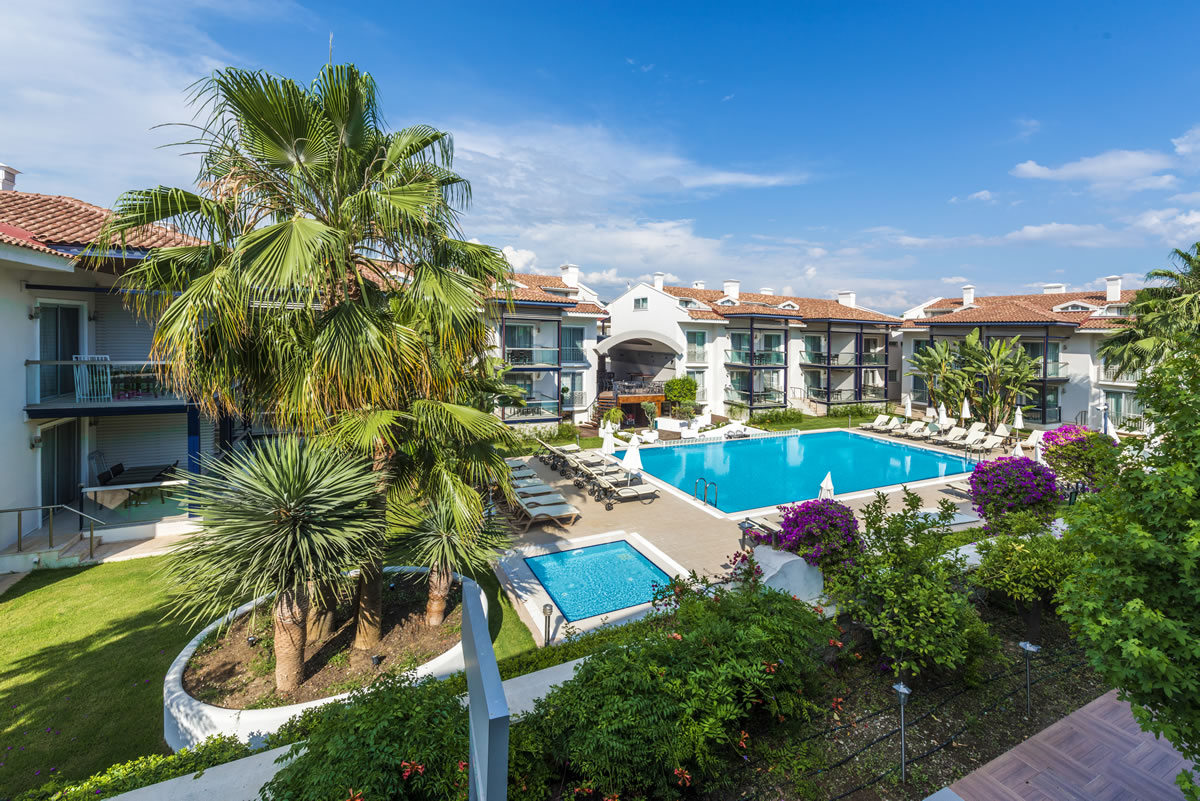
Discover the comfort and convenience of home at Diana Residence! Welcome to Diana Residence, located just 400 meters from Çalış Beach, the most famous beach in the Fethiye region. Established in 2010, this concept consists of 2+1 and 3+1 units and will enchant you. Surrounded by botanical plants, it offers you a peaceful accommodation experience.
All units are equipped with air conditioning, dishwasher, washing machine, jacuzzi, terrace, refrigerator, stove, seating area, dining set, LCD satellite TV, wireless internet, and a safe.
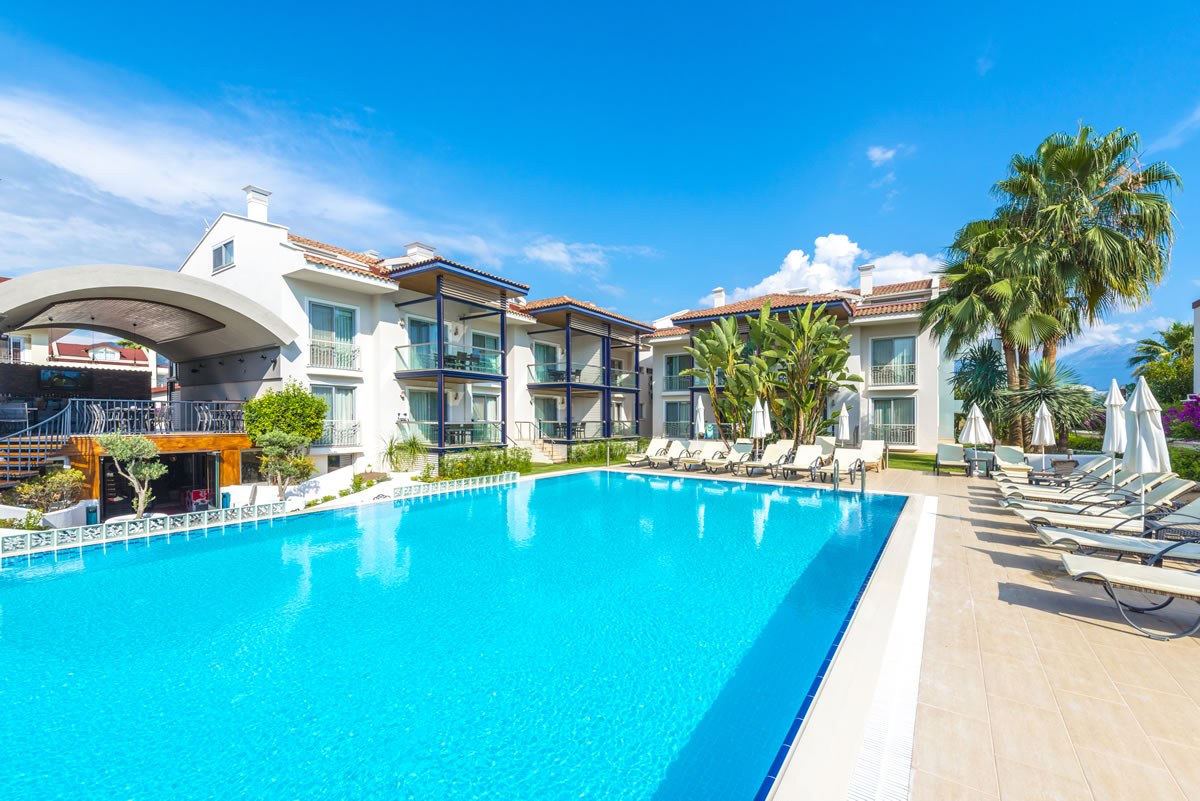
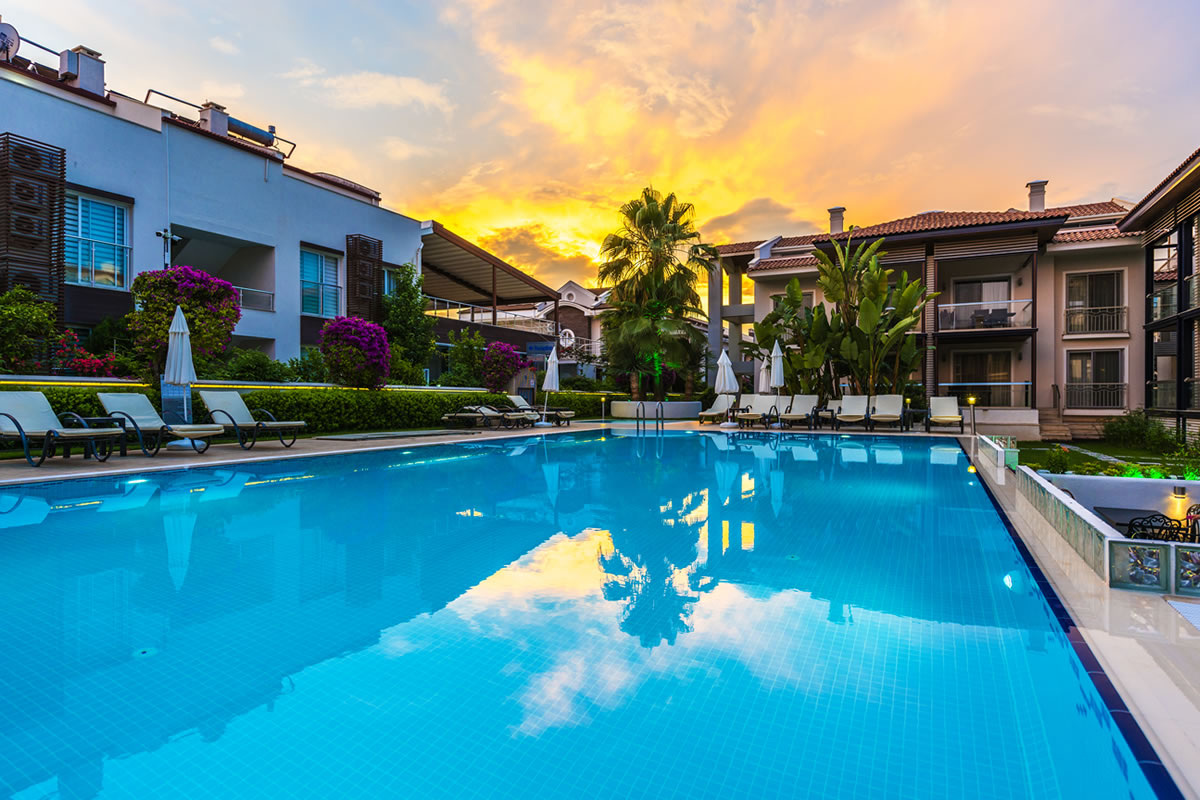
Diana Residence also features 1 adult pool, 1 children’s pool, and 1 miniature decorative pool. Designed according to Ministry of Health regulations, the pools are managed according to ministry standards.
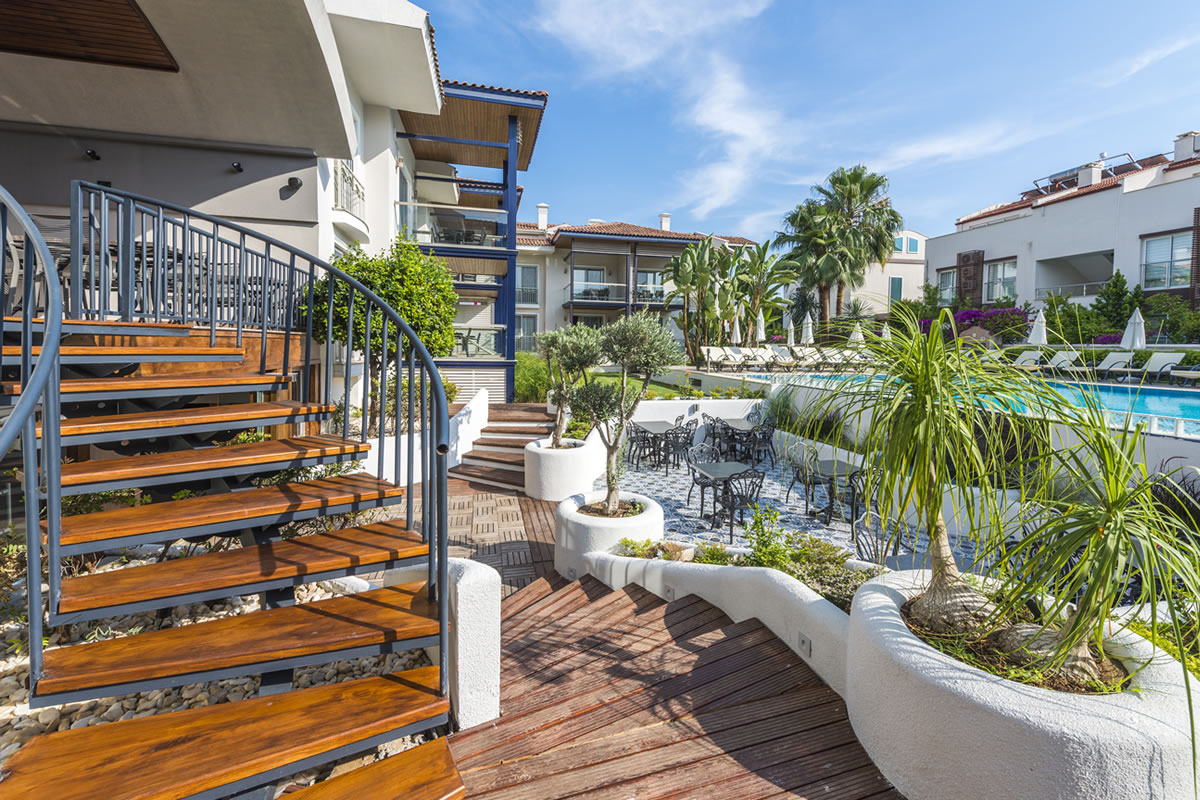
The property offers an à la carte restaurant and terrace bar, ready to provide enjoyable moments at any time of the day.
We are 45 km from Dalaman Airport, 14 km from Ölüdeniz, 800 m from Çalış Center, and just 400 m from the sea. The best public transport options are just 100 meters away.
 24
24
Apart & Villa
 1
1
RESTAURANTS & Bar
 1
1
SWIMMING POOL
1
CHILDREN'S POOL
RESTAURANT OPENING: 09:00-21:00
20 PERSONS INDOOR RESTAURANT
40 PERSONS OUTDOOR RESTAURANT, TOTAL CAPACITY 60 PERSONS. THE RESTAURANT SERVES WITH À LA CARTE MENU.
BAR IS OPEN FROM 09:00 TO 00:00. SERVES ALCOHOLIC DRINKS, SOFT DRINKS, COCKTAILS, ETC.
RECEPTION OPERATES 24/7.
MARKET OPERATES 24/7.
POOLS ARE OPEN FROM 08:00 TO 19:00.
POOLS
Our hotel has 2 pools, including adult and children pools.
Adult Pool: depth 1.45 m, 180 m³.
Children Pool: depth 0.45 m, 3 m³. Sterilization unit available.
In accordance with the Ministry of Tourism and regulations, measurements are taken 3 times a day to ensure hygiene.